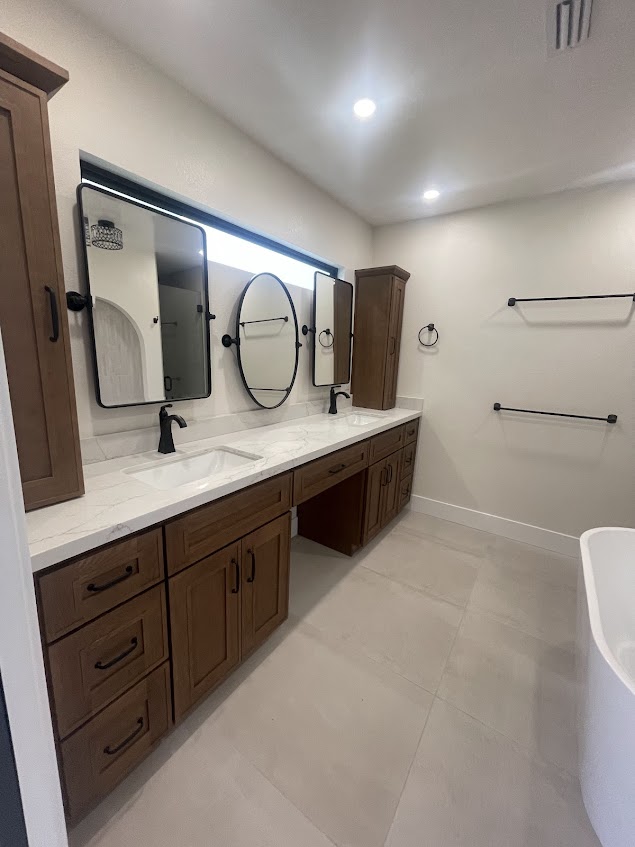
Large-Format Tile Installation: What San Diego Homeowners Need to Know
An expert guide to large-format tile installation in San Diego — covering substrate preparation, grout selection, lippage control, layout planning, and why precision installation matters for luxury floors and walls.
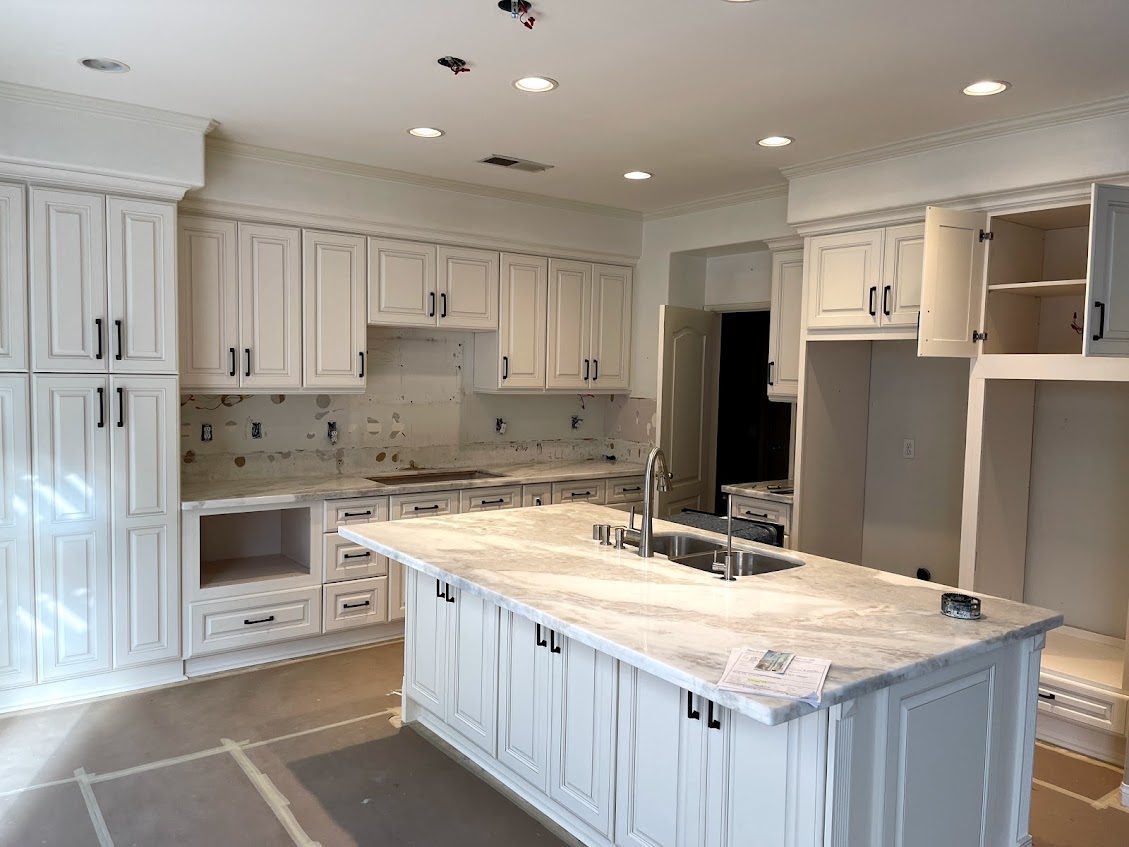
Large-format tile has transformed the look of luxury San Diego homes. By minimizing grout lines and creating a seamless, monolithic surface, oversized tiles make spaces feel larger, cleaner, and more architectural. But the qualities that make large-format tile so striking also make it one of the most demanding installations in residential construction. Understanding what goes into a proper installation is essential to protecting your investment.
What Counts as Large-Format Tile
Large-format tile is generally defined as any tile with one edge longer than 15 inches, though in luxury applications tiles commonly range from 24x24 inches up to 48x96 inches and beyond. These oversized formats are used on floors, walls, shower surrounds, and even countertops. The larger the tile, the fewer the grout lines — and the more unforgiving the installation becomes of any imperfection in the substrate or the setting technique.
Why Substrate Preparation Is Everything
Large-format tile will telegraph every imperfection in the surface beneath it. A floor that is out of level by even a fraction of an inch will create visible lippage — the condition where one edge of a tile sits higher than its neighbor — across the entire installation. Proper substrate preparation includes leveling the floor or wall, addressing cracks and movement, and installing an appropriate anti-fracture membrane where needed. Skip this step and no amount of skilled setting will save the result.
Lippage and Why It Matters
Lippage is the single most common failure in large-format tile installations. With smaller tiles, slight variations in height are masked by the frequency of grout lines. With large-format tile, even minimal height differences become immediately visible and can create a shadow line across the floor. Preventing lippage requires a flat substrate, the right trowel technique, proper mortar coverage, and the use of leveling clip systems during installation. It's a detail that separates a flawless installation from a visible one.
Mortar Selection and Coverage
Large-format tiles require a specialized large-format mortar — typically a medium-bed or large-tile mortar — that supports the weight and accommodates minor substrate variations while achieving full coverage beneath the tile. Full mortar coverage, often 95 percent or more for wet areas, is essential to prevent hollow spots, cracking, and bonded failure. Back-buttering each tile ensures complete contact and eliminates voids that can lead to long-term problems.
Layout Planning
A thoughtful layout is what makes a large-format installation look intentional rather than improvised. Before any tile is set, the installer plans the layout to balance the room, center the focal points, and minimize awkward cuts. In open-concept San Diego homes, the tile layout should flow consistently from the kitchen into adjacent living areas. Planning the layout in advance prevents the small mistakes — a sliver cut against a wall, an off-center focal line — that undermine the finished look.
Grout Selection for Large-Format Tile
With fewer grout lines, the grout you choose has an outsized visual impact. A grout color closely matched to the tile creates the most seamless, monolithic appearance — the signature look of luxury large-format installations. Contrasting grout can be used intentionally for design effect but tends to emphasize any layout imperfections. Epoxy or urethane grouts offer superior stain resistance and durability, making them ideal for high-traffic kitchen and bathroom floors.
Movement Joints and Cracking Prevention
Large expanses of tile need to accommodate movement. Expansion joints at the perimeter, transitions between rooms, and changes in plane allow the installation to flex with seasonal and structural movement without cracking. In San Diego, where temperature swings and minor seismic activity are realities, proper movement joint detailing is critical to a long-lasting installation. Anti-fracture membranes beneath the tile add another layer of protection against substrate cracking telegraphing through to the surface.
Weight and Structural Considerations
Large-format tile, particularly natural stone in oversized formats, is heavy. A floor that was designed for standard residential loads may need reinforcement to safely support a large-format stone installation. Before specifying oversized materials, an experienced installer or contractor evaluates the structural capacity of the floor and addresses any deficiencies. Ignoring weight considerations can lead to deflection, cracking, and costly failures.
The Difference Expertise Makes
Large-format tile is unforgiving. The tolerances are tighter, the preparation is more demanding, and the setting techniques require specialized skill and tooling. A contractor experienced in large-format installation understands the full system — substrate, membrane, mortar, layout, setting, and grout — and executes each step with precision. At 81 Tile & Stone, large-format tile and stone installation is one of our core specialties.
Protecting Your Investment
A properly executed large-format tile installation is a lasting investment that elevates the entire home. It's seamless, durable, and architectural. But achieving that result requires the right materials, the right preparation, and the right craftsmanship. Contact 81 Tile & Stone for a free estimate on your large-format tile or stone project. We serve San Diego, La Jolla, Del Mar, Rancho Santa Fe, Encinitas, Carlsbad, Coronado, and Point Loma.
Planning a remodel in San Diego?
From kitchen and bathroom remodels to custom tile and stone installation, we bring architectural-grade craftsmanship to high-end homes across San Diego County.
Request Free Estimate